Notice the change
Karpos looks for meaningful movement in the data, such as drying soil, rising EC, heat stress, or a reading that does not fit the recent pattern.
 Root & Relay
Karpos
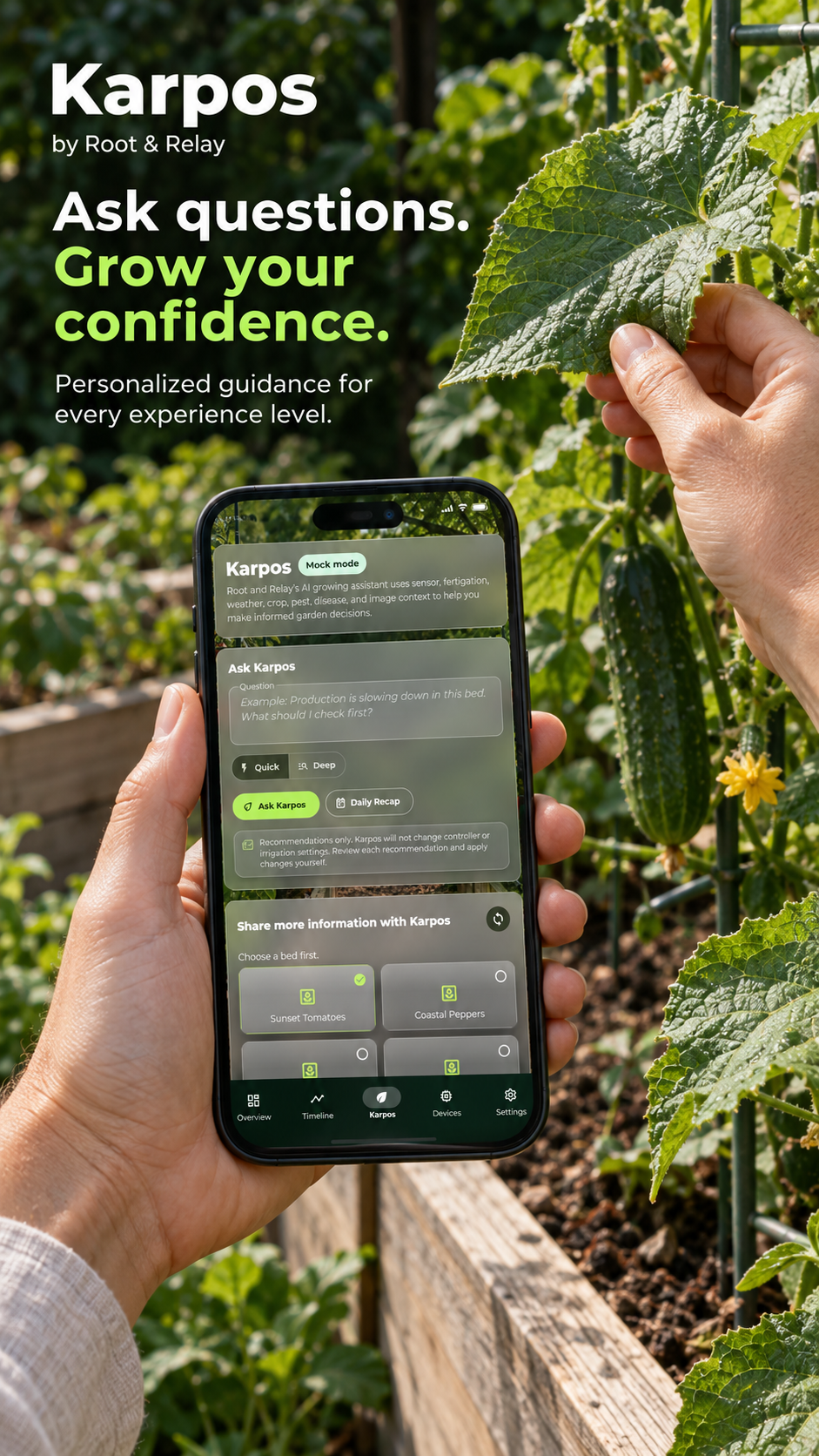
Karpos brings together your garden's sensor readings, plant photos, local weather, and history to help growers of every experience level understand what's happening and choose a practical next step. This public page shows sample answers only.
From signals to decisions
Karpos brings the garden together before it recommends a next step. Instead of treating one reading or one image as the whole story, it compares what the plants are showing with what the root zone, weather, and garden history are doing.
How Karpos works
Every response is designed to help the grower understand what changed, what matters most, and what to check next.
Karpos looks for meaningful movement in the data, such as drying soil, rising EC, heat stress, or a reading that does not fit the recent pattern.
It compares sensor trends with crop needs, images, weather, bed history, and the question the grower is actually asking.
It prioritizes a short list of checks and measured actions, explains why they matter, and calls out when more information is needed.
Context in practice
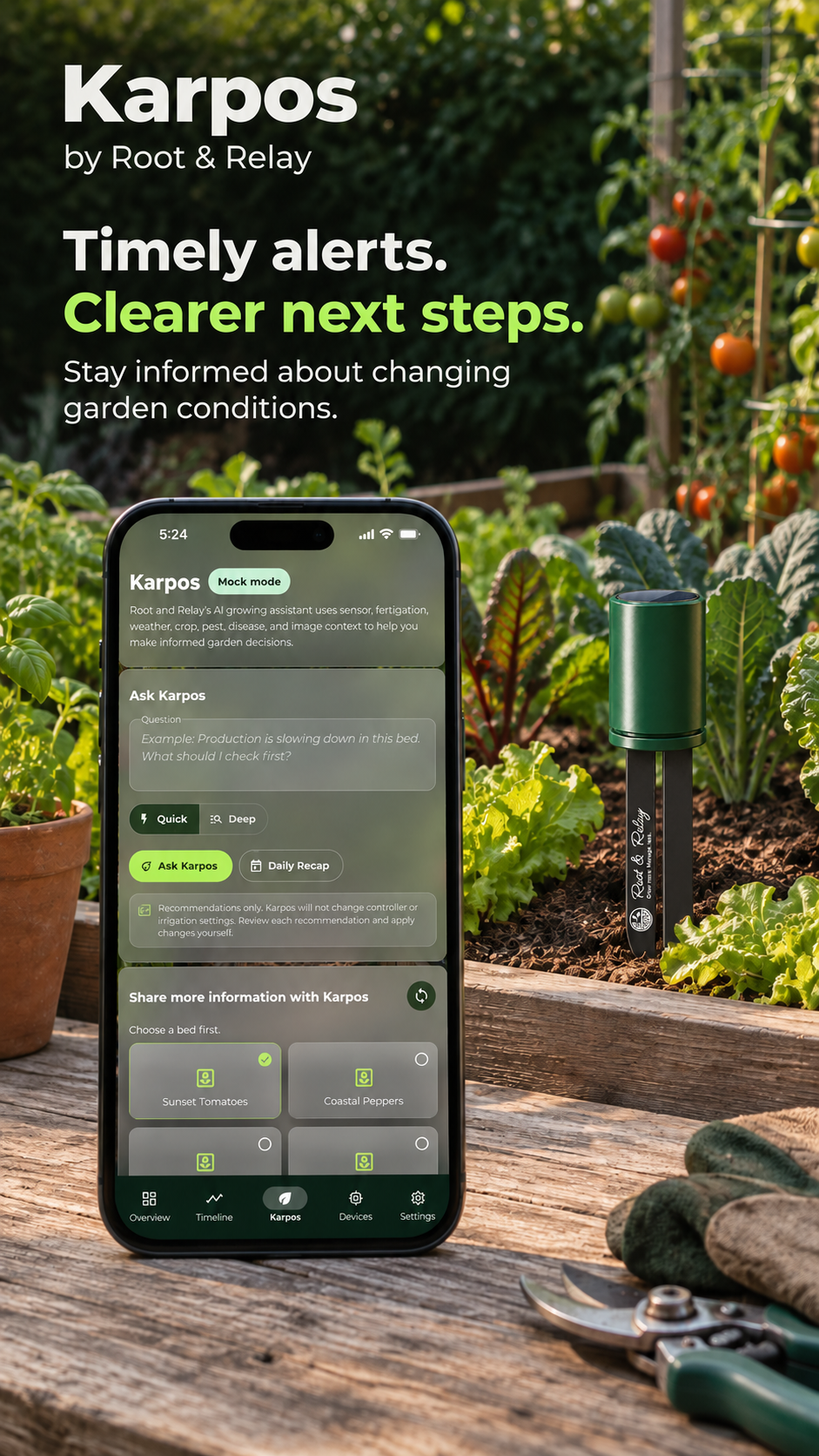
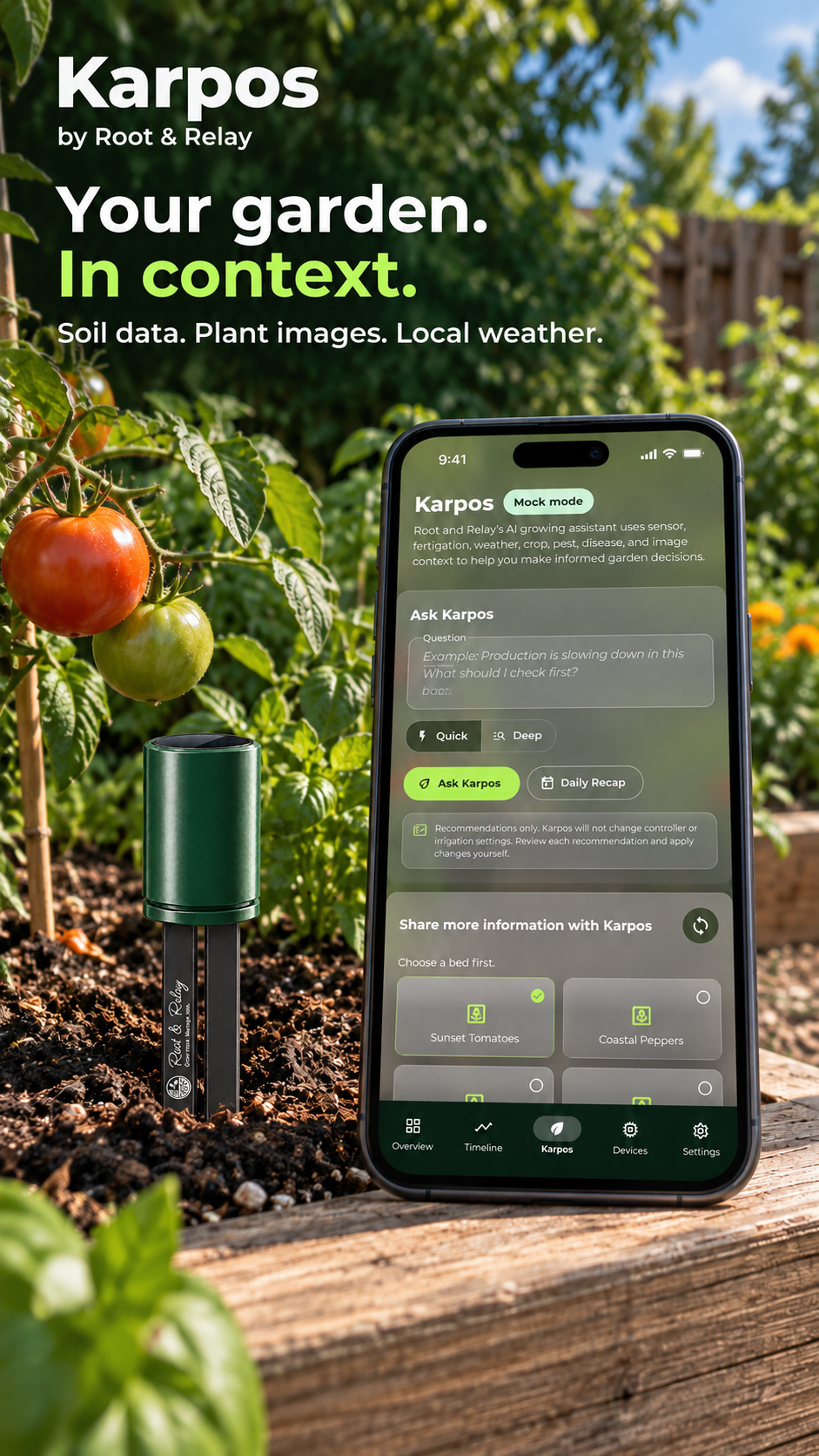
A timely alert is useful when it is connected to the conditions around it. Karpos is built to make that connection visible.
What a response should feel like
Karpos is not meant to replace observation or make blind changes to a controller. It helps the grower narrow the possibilities, understand the evidence, and choose the next check with confidence.
Start with evidence. The response identifies the signals or observations that support it.
Prefer reversible steps. Recommendations begin with inspection, measurement, and small adjustments.
Ask for what is missing. When the data is ambiguous, Karpos explains which photo, reading, or detail would help.
Keep the grower in control. Recommendations are reviewed by the user before any garden change is made.
Sample questions
Sample answer
Start with visual scouting before changing nutrients. Check the undersides of three damaged leaves, new growth, and the soil surface for beetles, caterpillars, frass, or fresh chewing. If moisture and EC are steady, chewing pests move higher than watering or feeding changes.
Open the Cucumber guide